

Health products and supplements are an affordable and effective way to ensure you and your loved ones are getting the daily recommended intake of essential vitamins, minerals and other important nutrients necessary for optimal health.
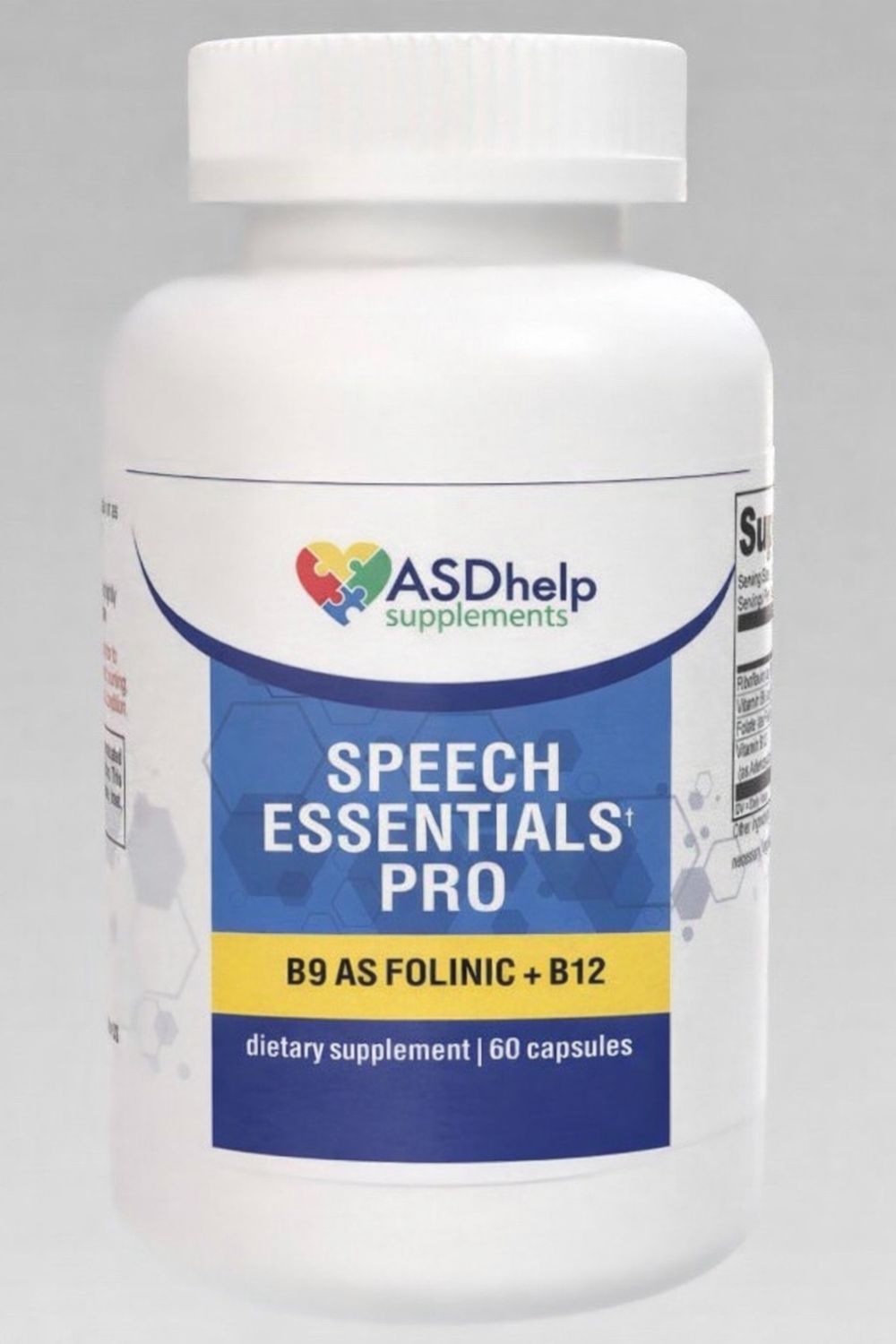
1 capsule contains 12 mg folinic acid (Calcium Folinate), which corresponds to 20,400 mcg DFE.
Based on the DFE conversion formula, this equals 12 mg of the active form of folinic acid.
According to studies, the daily dose should not exceed five capsules.
Suggested Protocol
• Discontinue medications that interfere with folate metabolism.
• Start folinic acid at 1/5 capsule — 0.5 mg/kg per day, divided into two doses.
• If needed, increase to 1–4 mg/kg per day, divided into two doses (maximum 50 mg per day, no more than 4 capsules).
• Take the supplement with food or after meals, morning or lunchtime.
Important Factors
• Avoid supplements containing folic acid (synthetic).
• Implement a dairy-free diet.
• Monitor changes in understanding and behavior.
• Monitor for possible (negative) side effects.
THE IMPORTANCE OF FOLATES
Folic acid (vitamin B9, also known as folate) is a water-soluble B vitamin that is essential for many physiological systems in the body.
Folate gets its name from the Latin word folium, meaning “leaf.” This highlights that the main natural sources of this vitamin are leafy vegetables. However, in the modern Western diet, the main source of folates is fortified foods.
Forms and Conversions of Folates
Folic acid is an inactive, oxidized form of folate compounds.
In the body, the main active form of folate is 5-methyltetrahydrofolate (5-MTHF).
• Folic acid is converted to dihydrofolate (DHF) and then tetrahydrofolate (THF) by the enzyme dihydrofolate reductase (DHFR). This reaction requires niacin (vitamin B3) and can be slowed by certain medications.
• THF is converted to 5,10-methylene-THF and then to 5-MTHF by the enzyme methylenetetrahydrofolate reductase (MTHFR).
• Next, 5-MTHF is converted back to THF by the enzyme methionine synthase, which depends on vitamin B12.
In this reaction, 5-MTHF donates a methyl group to homocysteine, forming methionine and regenerating THF.
SPEECH ESSENTIALS PRO FORMULA DESCRIPTION
Speech Essentials Pro is an improved and enhanced formula based on folinic acid, with active cofactors that support the folate cycle.
The formula includes:
• Vitamin B6 (as Pyridoxal 5 Phosphate) – 2.5 mg
• Folate (as Calcium Folinate) – 20,400 mcg DFE (including 12,000 mcg folinic acid)
• Vitamin B12 (as Adenosylcobalamin) – 200 mcg
Speech Essentials Pro can be used as a standalone product and may also be combined with the previous formula when needed (while соблюding daily dosing limits).
The Role of Folates in the Body
Folates are required for the continuous synthesis of purine and pyrimidine nucleic acids—the molecules that form DNA and RNA.
• DNA stores genetic information and must be copied during cell division and reproduction.
• Therefore, folates are especially important during periods of rapid cell division, including:
• before birth, during embryo and fetal development,
• early childhood, when cells are growing rapidly.
Interaction With Other Cycles
The folate cycle interacts with the methionine cycle and the production of tetrahydrobiopterin (BH4).
• The methionine cycle is essential for DNA methylation, which helps regulate gene expression.
• BH4 is necessary for producing nitric oxide (NO), which regulates blood flow, and for synthesizing neurotransmitters:
• dopamine,
• serotonin,
• norepinephrine (a precursor to adrenaline).
During the production of these neurotransmitters and NO, BH4 is converted to dihydropterin (BH2). Recycling BH2 back to BH4 requires the conversion of 5-MTHF to THF.
Consequences of Folate Deficiency
Folate deficiency is associated with several conditions:
• Anemia — because blood cells must be continually renewed, low folate can lead to reduced red blood cell production.
• During pregnancy — folate deficiency can cause neural tube defects, such as spina bifida.
CEREBRAL FOLATE DEFICIENCY — A RECENTLY IDENTIFIED NEURODEVELOPMENTAL DISORDER
Ten years ago, Ramaekers and colleagues described a new neurodevelopmental disorder called “cerebral folate deficiency.”
They observed 5 patients who developed normally until 4–6 months of age. During the second half of the first year, these patients showed developmental regression and increasing neurological symptoms, including:
• irritability,
• delayed psychomotor development,
• ataxia,
• dyskinesia,
• pyramidal signs,
• visual disturbances,
• epilepsy.
They also developed acquired microcephaly.
In these patients, 5-MTHF levels were normal in serum and red blood cells but were low in cerebrospinal fluid. This condition was called CFD (Cerebral Folate Deficiency) to emphasize folate deficiency specifically within the central nervous system (CNS).
CEREBRAL FOLATE TRANSPORTERS
To understand CFD, it is important to consider that the CNS is a protected area of the body. The blood–brain barrier (BBB) strictly regulates which substances can enter the brain.
To cross the BBB, active folate (5-MTHF) requires one of two specialized transport systems:
1. Folate Receptor 1 (FR1)
The primary transporter is folate receptor 1 (FR1).
• 5-MTHF binds to FR1 and together they cross the BBB.
• On the basolateral side of the cell, 5-MTHF is released into the CNS and FR1 returns to bind another 5-MTHF molecule.
• This process requires energy and is ATP-dependent.
2. Reduced Folate Carrier (RFC)
The second transporter is RFC.
• RFC binds 5-MTHF less strongly but has a higher affinity for 5-formyltetrahydrofolate (folinic acid, leucovorin).
• RFC also helps deliver 5-MTHF into neurons once it is already inside the CNS.
Additional Pathway
If blood folate concentrations are high enough, folates may enter the brain even without transporter involvement.
CAUSES OF CEREBRAL FOLATE DEFICIENCY
Ramaekers’ group examined the gene encoding FR1 to determine whether a genetic mutation could explain impaired 5-MTHF transport into the CNS. No mutations were found.
In 2004, Ramaekers and Blau expanded the study to 20 patients and again found no FR1 mutations. However, they identified non-functioning FR1 receptors in cerebrospinal fluid, leading to the hypothesis that autoantibodies could irreversibly bind FR1 and block folate transport.
In 2005, Ramaekers and colleagues detected blocking autoantibodies to FR1 in serum in 25 of 28 children with CFD. These antibodies were absent in an age-matched control group.
CFD and Mitochondrial Disorders
In 2006, a report linked CFD to mitochondrial disease in a child with an incomplete form of Kearns–Sayre syndrome.
Subsequent studies confirmed associations between CFD and mitochondrial disorders, including:
• complex I deficiency,
• Alpers disease,
• complex IV hyperfunction,
• and various other mitochondrial pathologies in children and adults.
Importantly, in most of these cases, FR1 autoantibodies were not present. This led to the hypothesis that ATP deficiency in mitochondrial dysfunction may impair ATP-dependent folate transport into the CNS.
CFD AND AUTISM SPECTRUM DISORDER
• In a second group of 20 patients with CFD, 7 children had autism spectrum disorders.
• In the first research group, 5 of 28 patients with FR1 autoantibodies had low-functioning autism with neurological features.
• Later studies identified additional cases of CFD in children with idiopathic autism (autism of unclear origin).
These findings suggest that early low-functioning autism with neurological symptoms may be characteristic in children who have both autism and CFD.
Interestingly, low 5-MTHF levels in cerebrospinal fluid have also been reported in Rett syndrome (which is also categorized within ASD).
The Role of Autoantibodies and Other Factors
• Only a minority of children with CFD have FR1 autoantibodies.
• In some children with autism and Rett syndrome, these antibodies are also absent.
This suggests that additional mechanisms may contribute to CFD beyond autoantibodies, and mitochondrial dysfunction may be one such factor.
Indeed:
• Mitochondrial disease often accompanies CFD.
• Its prevalence among children with idiopathic autism is significantly higher than in the general population.
• Some studies link mitochondrial dysfunction to regressive autism in children with CFD.
• Rett syndrome has also been associated with mitochondrial abnormalities.
Even when a full mitochondrial disease diagnosis is not confirmed, partial mitochondrial dysfunction may still be present and may contribute to CFD.
Shelf life: 2 years from the manufacturing date printed on the bottom of the bottle.
Our mission is to help you enjoy optimum health through proper nutrition! Good health is all about looking your best and having the energy and stamina to do the things you love. It's difficult to be productive and happy if you're sick or run down all the time. We believe strongly that certain supplements should be at the core of your health program.
We are committed to providing only high quality products. Many brands will never be sold in our stores due to concerns we have with their quality control or business practices.
BioHelp is a family owned and operated nutraceutical distribution company. BioHelp offers a wide range of professional only product lines, to everyone who's main goal is to achieve a better quality of life, and we take pride in our ability to educate our clients on product selection. We are your personal concierge to the nutraceutical world. With the growing awareness of food allergies, our staff is able to provide support on products that would best suit the best. Make sure your body is getting all the nutrition it needs to stay healthy and keep you strong. BioHelp will steer you in the right direction and ensure your supplements fit your goals and lifestyle.
Registered to Echidna LLC, TIN 460522441
1600 148th Avenue Southeast,
Bellevue, WA 98007